Raumgestaltung · S7 Lecture 0X Roman Vlahović EST. 1966 — STILL UNANSWERED

Technology is the answer
but what was the question?

A lecture on Cedric Price (1934–2003): the British architect who refused to build, designed buildings to die, and asked computers to get bored and rearrange the room. Plus: what cybernetics, xenofeminism and Michel Serres would do at his dinner table.

Source talk1979 · 29 min 43 sec · 24 slides
SpeakerCedric Price (FRIBA)
RecordingPidgeon Archive
Famous unbuiltFun Palace · Thinkbelt · Generator
DESIGNED TO BE DEMOLISHED
01 / The man

The most famous architect who never finished a building.

Cedric Price was the wittiest provocateur of postwar British architecture. He believed buildings were temporary commodities — like newspapers, like Polaroids, like good ideas. He drew radically more than he built; almost all his most influential projects (Fun Palace, Potteries Thinkbelt, Generator) remained unbuilt. And yet his shadow stretches over the Pompidou, the London Eye, Rem Koolhaas, Bernard Tschumi, and every "flexible cultural centre" pitched in PowerPoint today.

Price's clients ranged from the theatre director Joan Littlewood to the British Transport Docks Board, from London Zoo to a small American charity. His preferred technologies were cranes, escalators, gantries, inflatables, plug-in cabins, computers, and trains. He preferred trains to cars, processes to objects, and second thoughts to first ones.

1934Born, Staffordshire
1960Fun Palace (with Joan Littlewood)
1964Potteries Thinkbelt
1976InterAction Centre, built
1978The Generator (with John Frazer)
20yrDesigned lifespan of InterAction
2003Died, aged 68
CCAArchive in Montreal since 1995
"I aim at an architecture which is responsive to the human being resting, changing its mind, having doubts, having quiet periods, having periods of great activity." — Cedric Price, 1979 lecture, slide 23
02 / His value system

Eight things Cedric Price actually believed.

Stitched together from the 1979 talk, his conversations with Hans Ulrich Obrist, and the writings of those who knew him — these aren't slogans. They're operating instructions for a different practice of architecture.

— 01

Enabling, not determining.

Architecture's job is not to dictate behaviour, but to enable possibility. The architect shrinks; the user grows.

— 02

Calculated uncertainty.

The plan should be a loose net, not a cage. Design carefully for what you don't yet know people will want.

— 03

Buildings should die.

Most buildings outlive their purpose. Design a 20-year lifespan and an exit plan; sentimentality is a planning problem.

— 04

Time is the fourth column.

Different elements (frame, services, cabins, equipment) decay at different rates. Build like an aircraft, not a pyramid.

— 05

Technology serves whim.

Use tight, advanced engineering to deliver loose, free social possibility — not the other way around.

— 06

The human is the resource to conserve.

"The only thing that really kills is hard and boring work." Coal, tin and oil are cheap compared to a wasted human spirit.

— 07

Delight is a function.

Joy, doubt and surprise are not decoration. The aviary, the inflatable, the bored computer are programmatic.

— 08

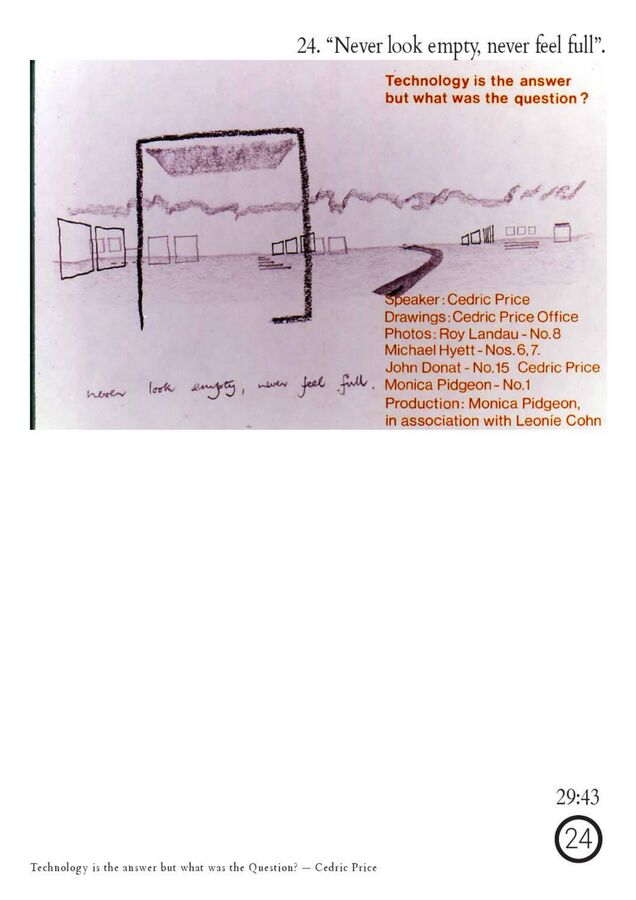
"Never look empty, never feel full."

His final design slogan — a description of every good space, every good library, every good evening.

03 / Loves & hates

What made Cedric smile, what made him scowl.

♥ Loves

  • Cranes, escalators, gantries — anything that lets you change your mind by Tuesday.
  • Trains. Especially decommissioned ones repurposed as universities.
  • Joan Littlewood, Buckminster Fuller, Gordon Pask — fellow troublemakers.
  • Pubs, particularly long conversations in them.
  • Inflatables, tension cables, plug-in cabins — light kit over heavy form.
  • Computers that get bored when no one asks them to do anything.
  • The Oxford English Dictionary (definitionally inclined).
  • Demolition as a positive act.

✕ Hates

  • "Cathedrals" — buildings preserved forever out of dreary habit.
  • The traditional university — closed gates, fixed campus, fee-paying minds.
  • Architects who behave like form-givers and oracles.
  • Monuments. Listing buildings. The whole heritage industry.
  • Boredom — "the only thing I know that really kills."
  • Behavioural scientists pretending they can predict the user.
  • Compromise for the sake of economic or political comfort.
  • Buildings designed to last forever and be useful for nothing in particular.
04 / The 24 slides

The 1979 lecture, in analog sequence.

Price gave the talk with a slide projector and a beep. When you hear the beep, turn the page. The reel below is the original sequence — same captions, same timecodes — extracted from the booklet by Lorenza Baroncelli & Hans Ulrich Obrist for the Swiss Pavilion at the 14th Venice Biennale.

1
Slide 1: Cedric Price
00:00
Cedric Price.
2
Slide 2: Fun Palace
01:33
Fun Palace.
3
Slide 3: Interior idea for Fun Palace
02:12
Interior idea for Fun Palace.
4
Slide 4: InterAction building
03:40
InterAction building.
5
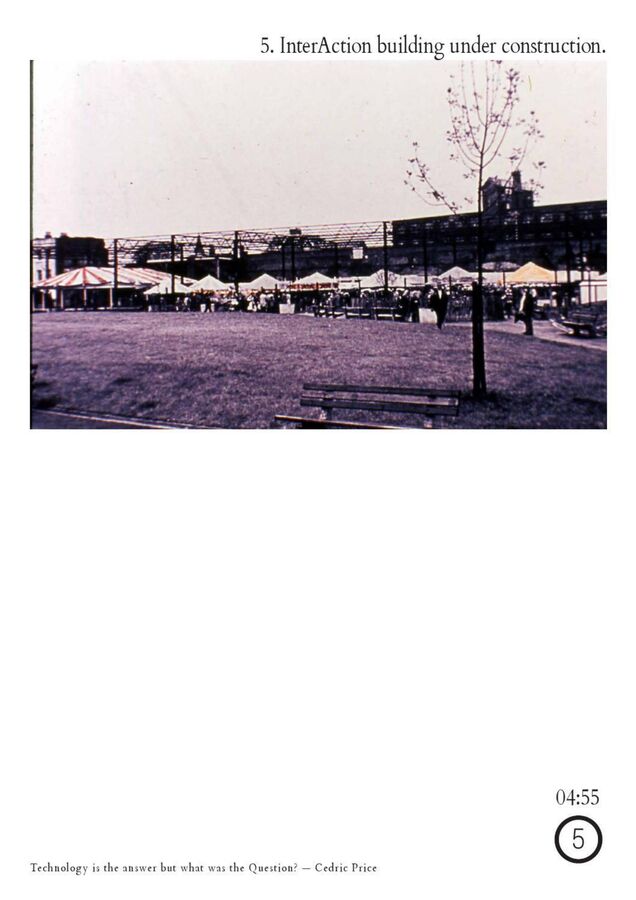
Slide 5: InterAction under construction
04:55
InterAction under construction.
6
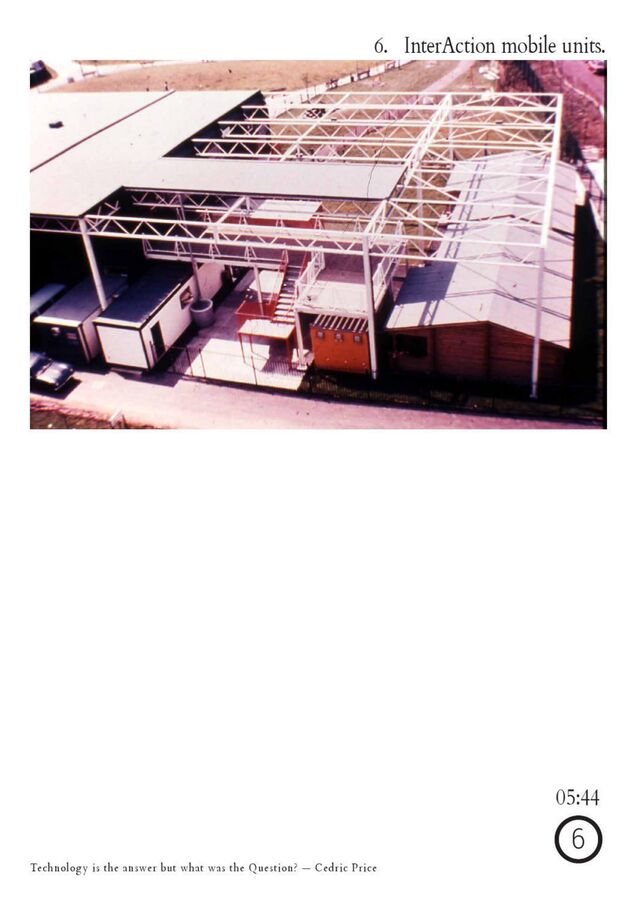
Slide 6: InterAction mobile units
05:44
InterAction mobile units.
7
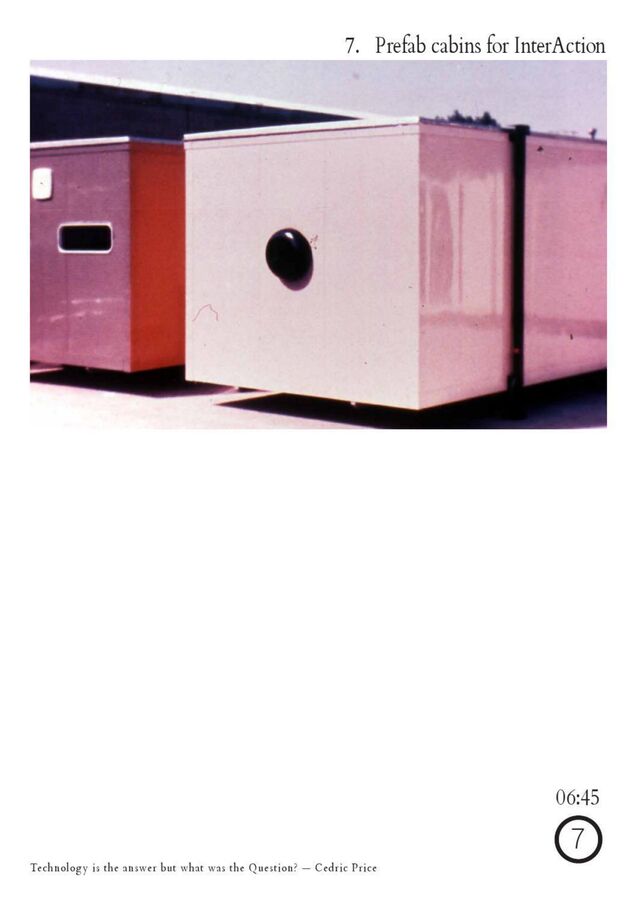
Slide 7: Prefab cabins for InterAction
06:45
Prefab cabins for InterAction.
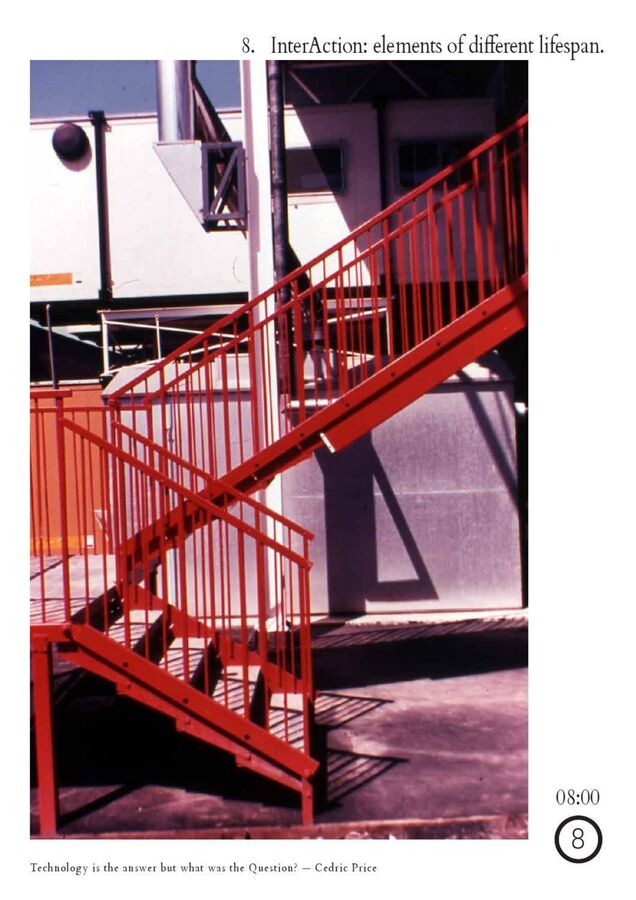
8
Slide 8: Elements of different lifespan
08:00
InterAction: elements of different lifespan.
9
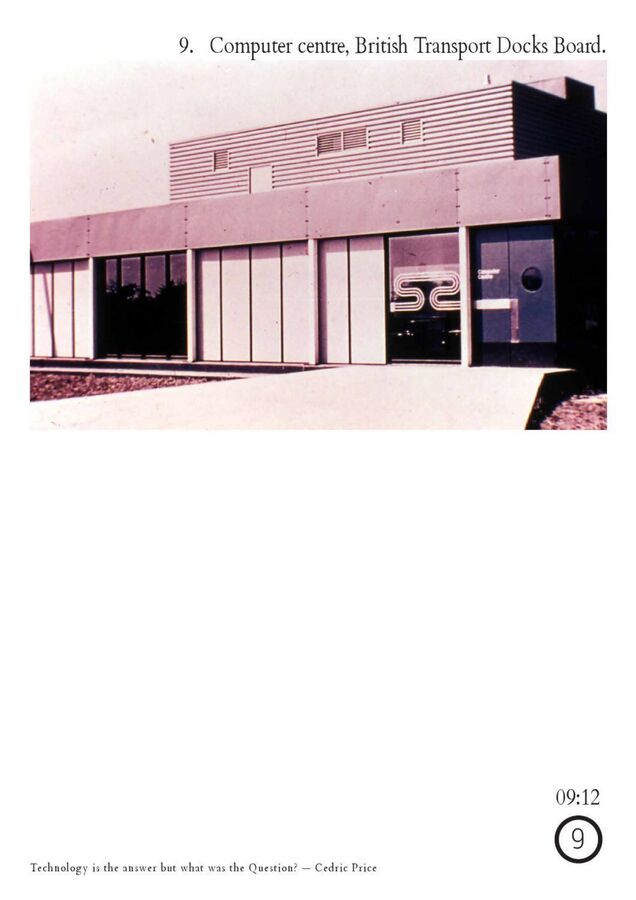
Slide 9: Computer centre, British Transport Docks Board
09:12
Computer centre, British Transport Docks Board.
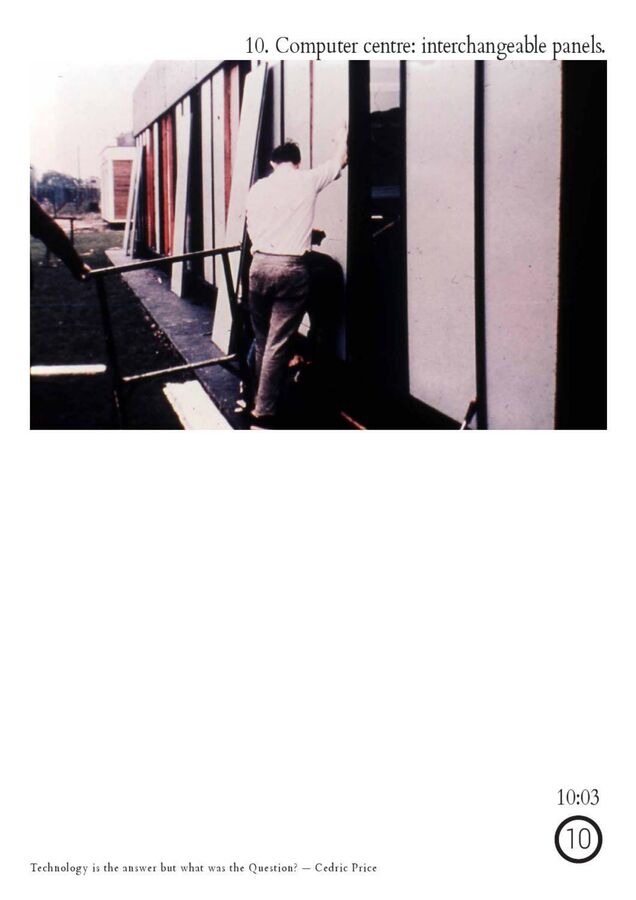
10
Slide 10: Computer centre interchangeable panels
10:03
Interchangeable panels.
11
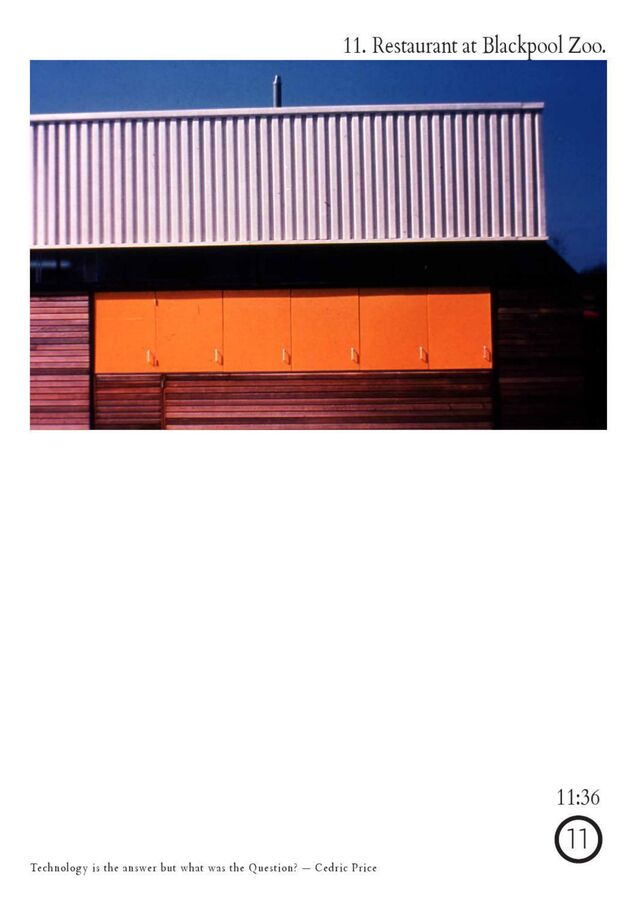
Slide 11: Restaurant at Blackpool Zoo
11:36
Restaurant at Blackpool Zoo.
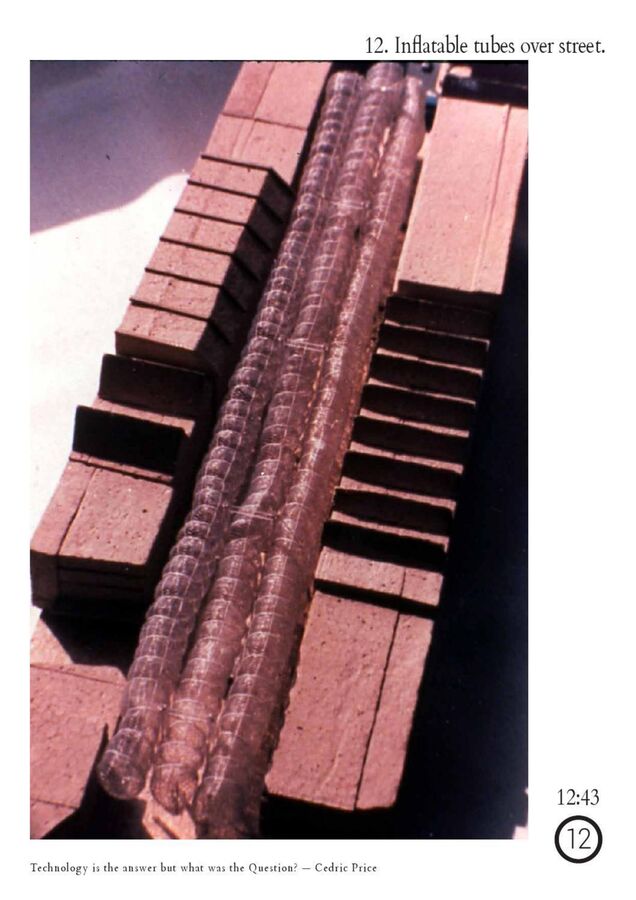
12
Slide 12: Inflatable tubes over street
12:43
Inflatable tubes over street.
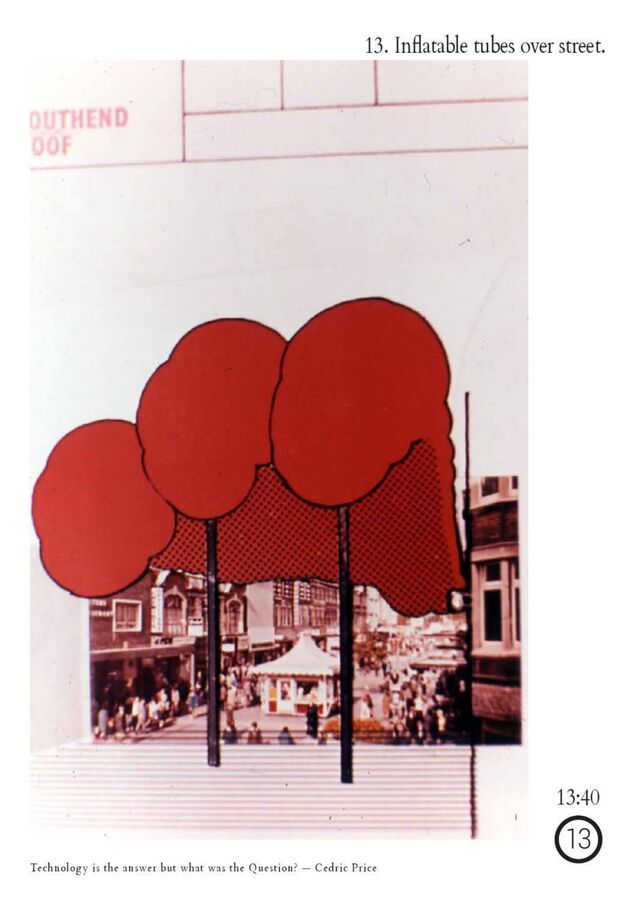
13
Slide 13: Inflatable tubes over street
13:40
Inflatable tubes (alt).
14
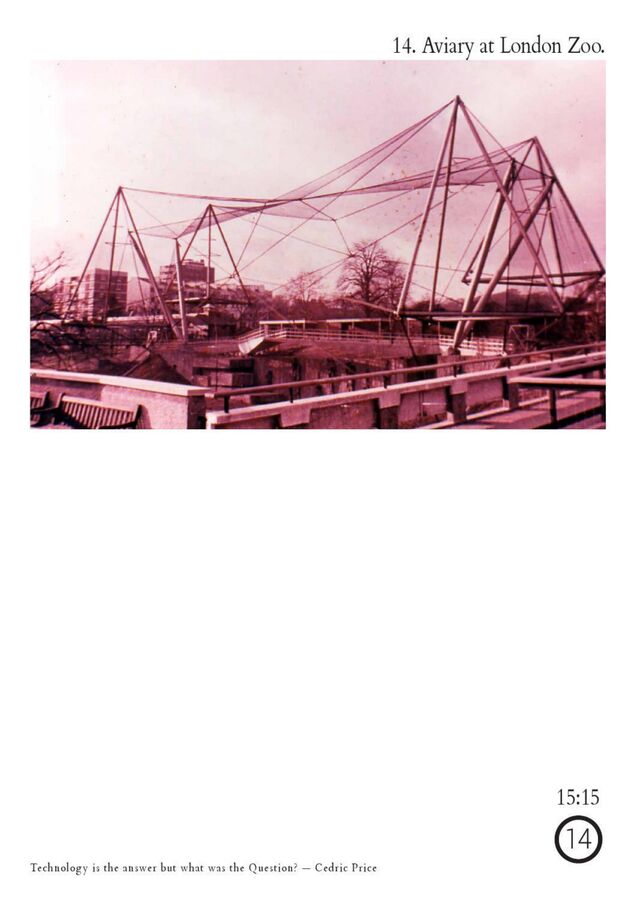
Slide 14: Aviary at London Zoo
15:15
Aviary at London Zoo.
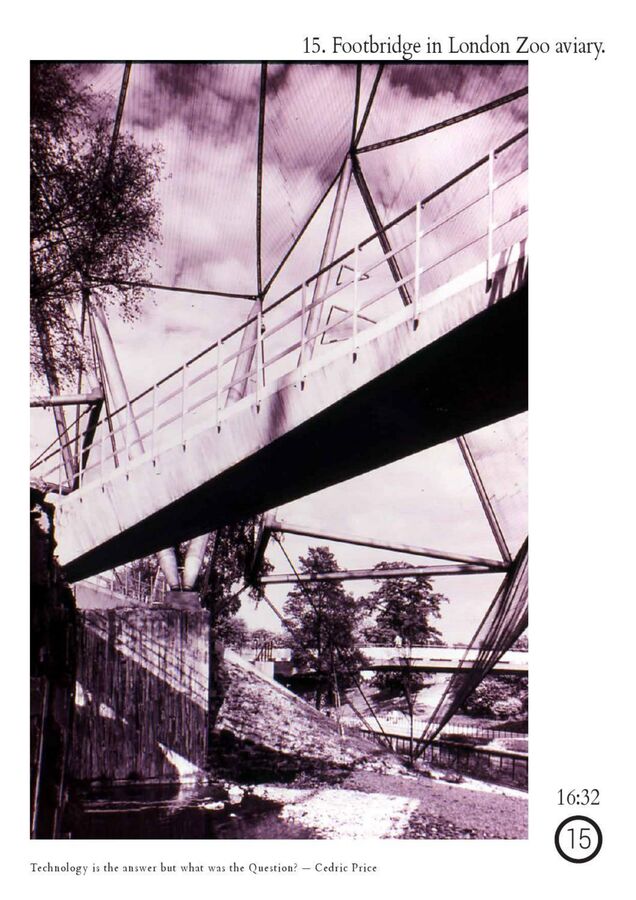
15
Slide 15: Footbridge in London Zoo aviary
16:32
Footbridge in London Zoo aviary.
16
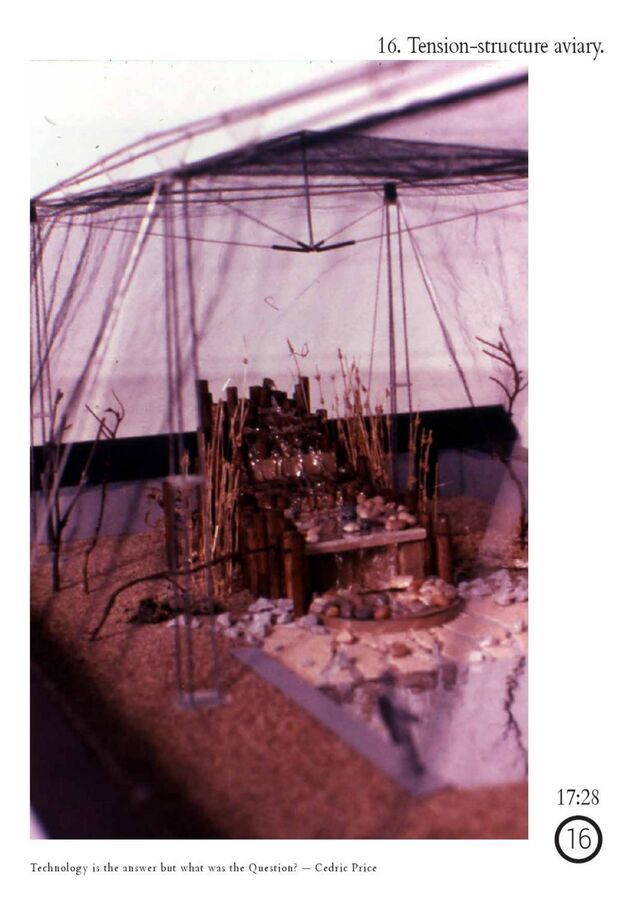
Slide 16: Tension structure aviary
17:28
Tension-structure aviary.
17
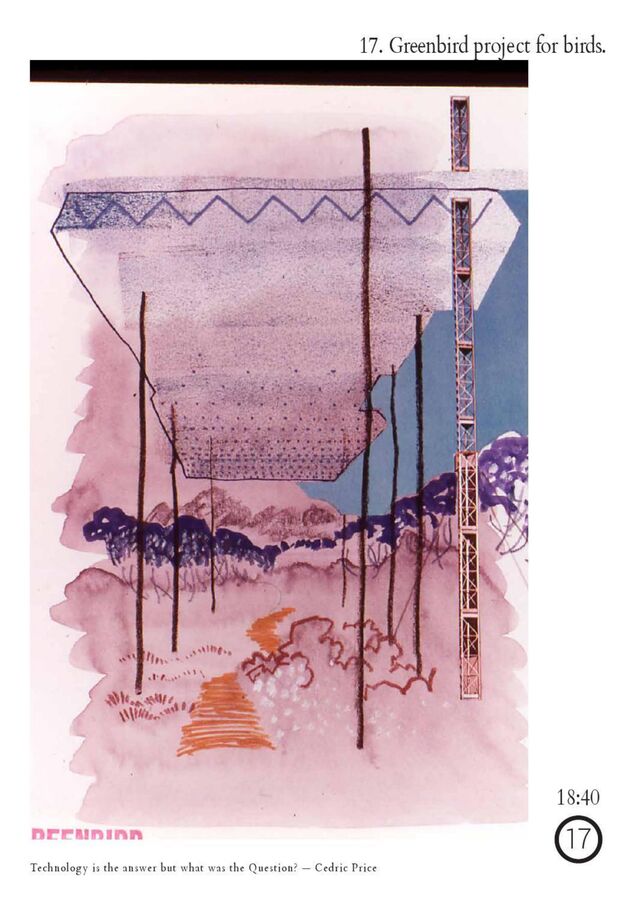
Slide 17: Greenbird project (walking aviary)
18:40
"Greenbird" walking aviary.
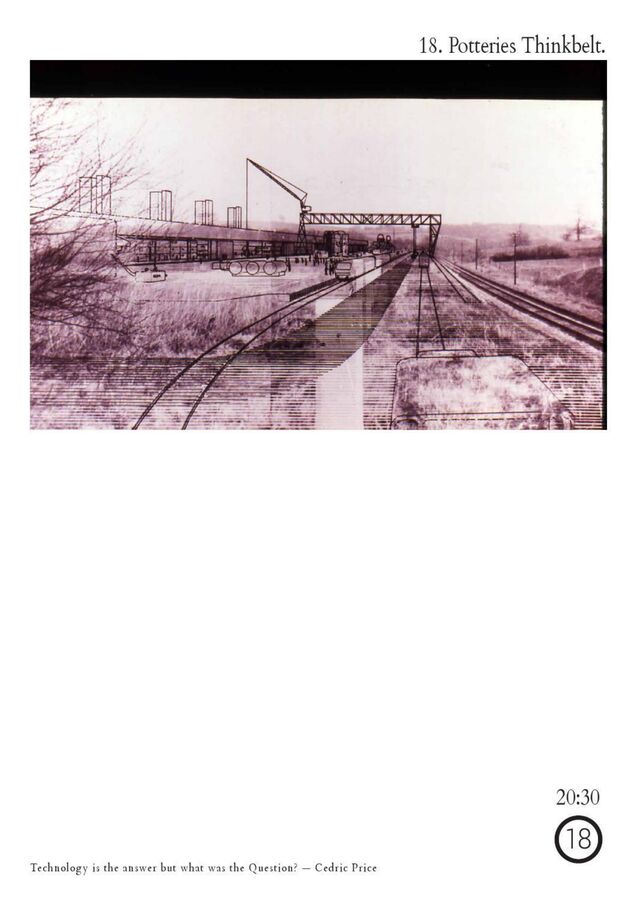
18
Slide 18: Potteries Thinkbelt
20:30
Potteries Thinkbelt.
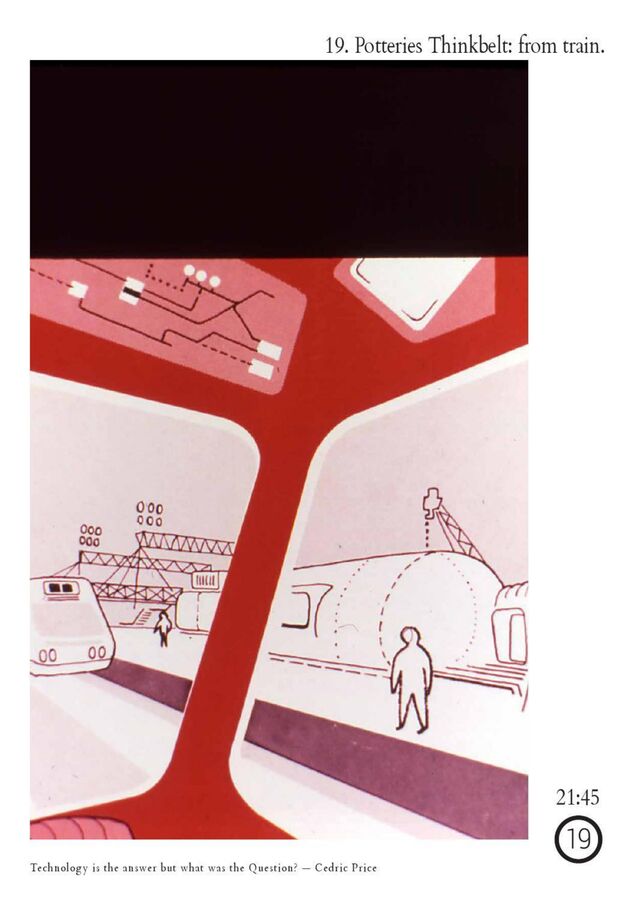
19
Slide 19: Thinkbelt from train
21:45
Thinkbelt: from train.
20
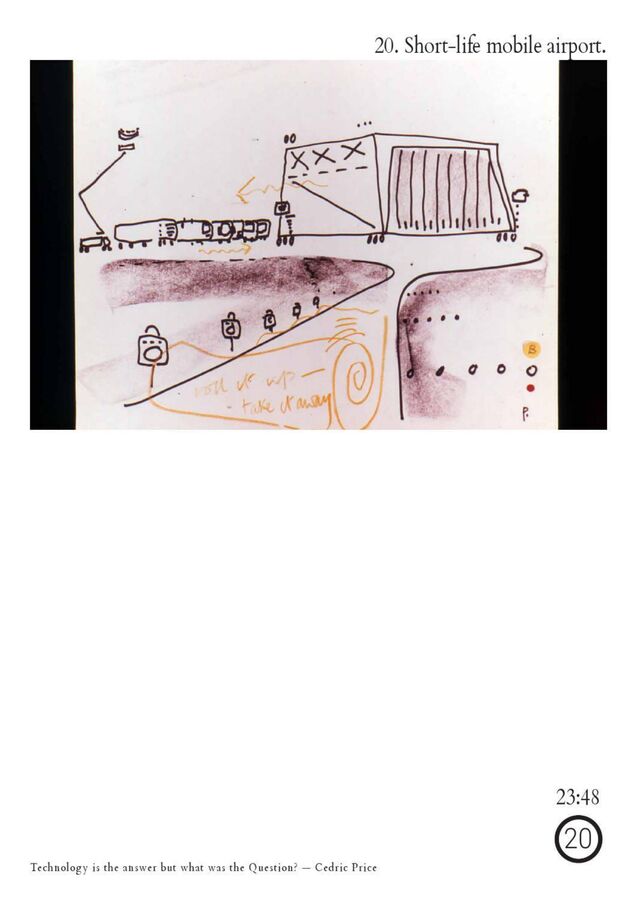
Slide 20: Short-life mobile airport
23:48
Short-life mobile airport.
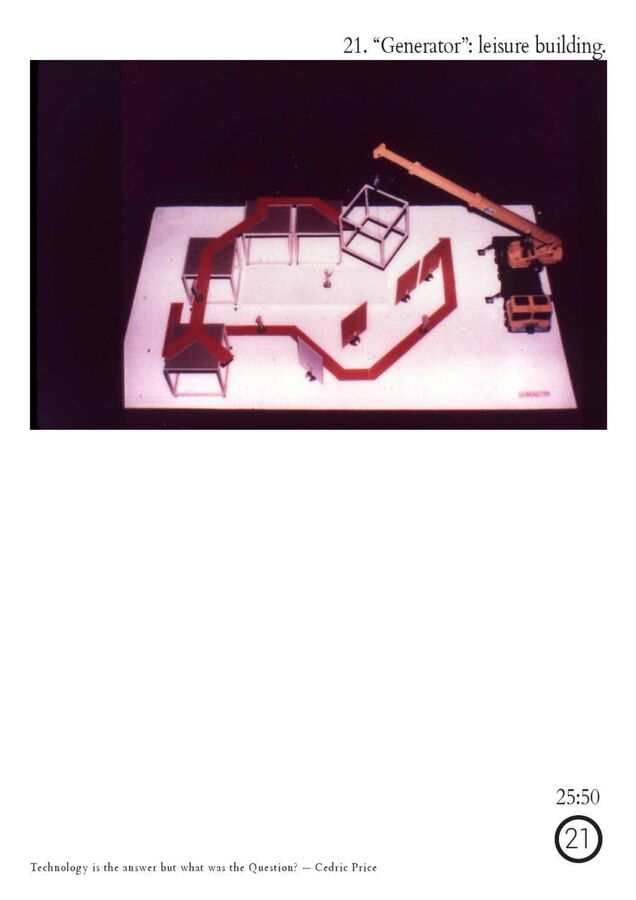
21
Slide 21: Generator leisure building
25:50
"Generator" leisure building.
22
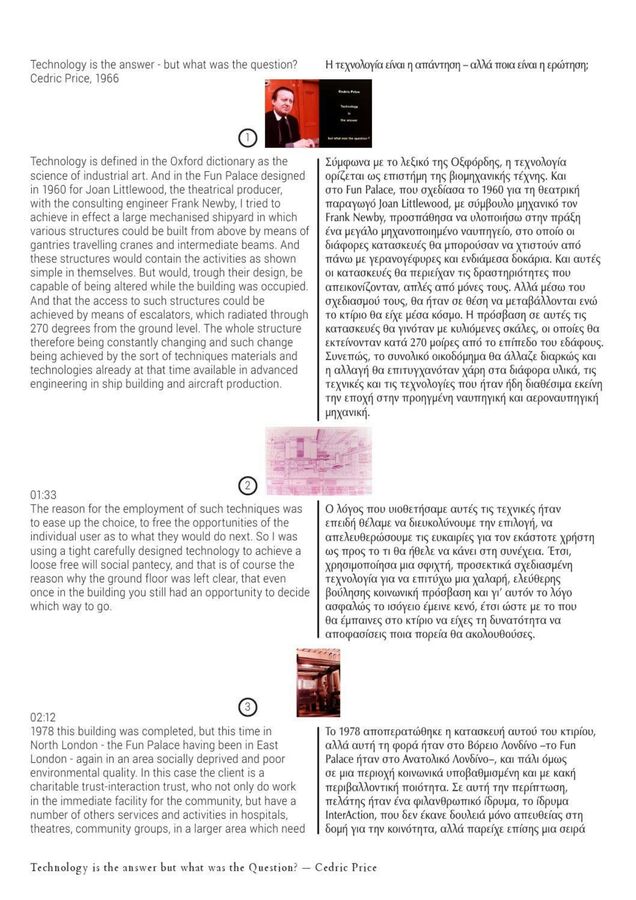
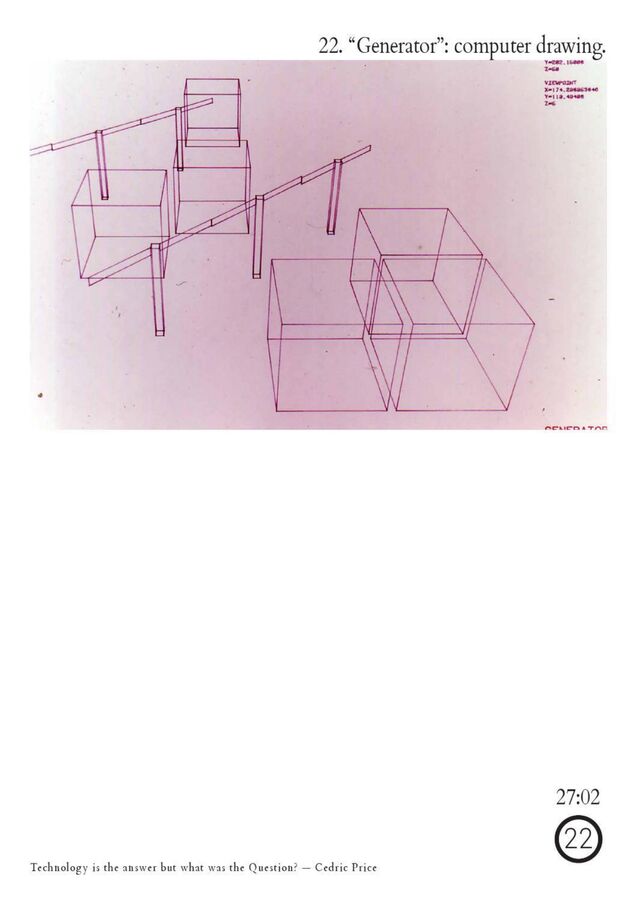
Slide 22: Generator computer drawing
27:02
Generator: computer drawing.
23
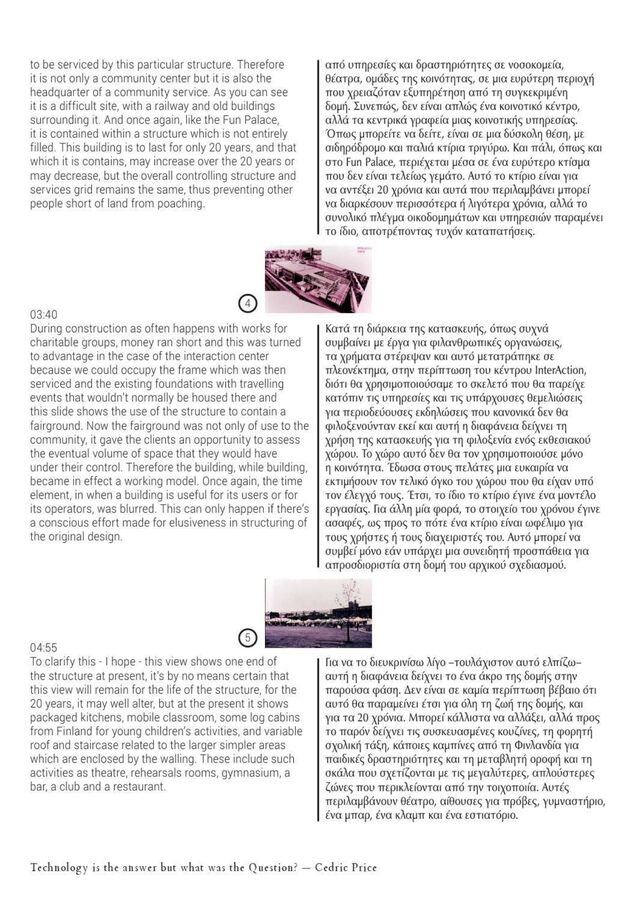
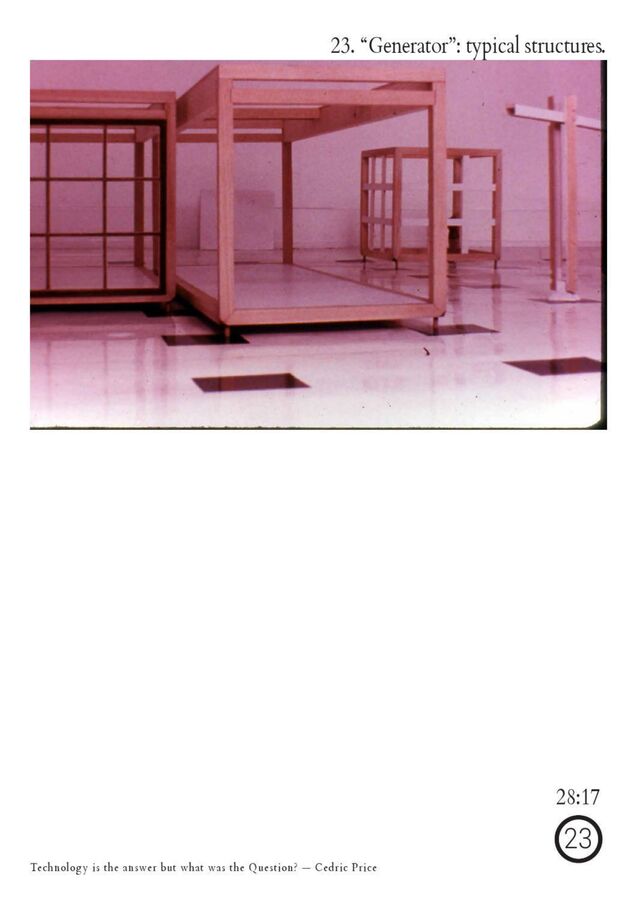
Slide 23: Generator typical structures
28:17
Generator: typical structures.
24
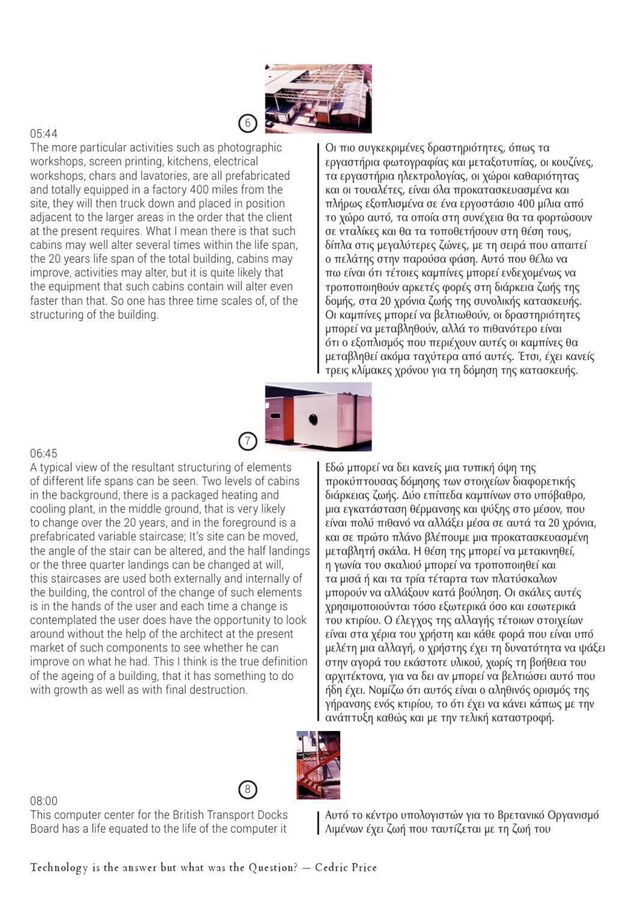
Slide 24: Never look empty, never feel full
29:43
"Never look empty, never feel full."
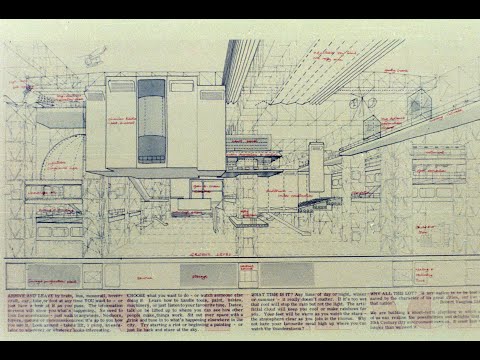
05 / Watch & listen

The man himself, on tape.

Price was a fantastic talker. The clip below is an excerpt of his 1979 lecture — his actual voice describing the slides above, with the actual projector beep.

Further listening: the full 29-minute lecture lives on Pidgeon Digital; the full booklet (with all 24 slides) is on Monoskop.

06 / Cybernetics & systems theory

The building as a learning machine.

If Price has a hidden philosophy, it is second-order cybernetics. The Fun Palace (1960–64) was developed with a Cybernetics Subcommittee led by Gordon Pask, the British cybernetician of "conversation theory" and the inventor of Musicolour. Pask's contribution wasn't decorative: he proposed the building should monitor and learn the patterns of its users, and either react to them or perturb them, in a Norbert-Wiener-meets-Joan-Littlewood feedback loop.

Price's other invisible references are Stafford Beer's Viable System Model (a cybernetic theory of organisations); Norbert Wiener's original Cybernetics: Or Control and Communication in the Animal and the Machine (1948); and Buckminster Fuller's logistics-as-design. The Generator (1976–80), developed with John and Julia Frazer, was arguably the world's first "intelligent building" — its computer was supposed to rearrange the plan if no one asked for anything for a while, because boredom is a system error.

This is what makes Price more than a flexible-architecture trivia question. He treated buildings as conversational machines — not just kinetic, but cognitive.

USERS (humans, weather, time) BUILDING (frame + plug-in kit) COMPUTER (monitors, suggests, bored) PROGRAMME (activities, dreams, doubts) DEMOLITION (20-year exit plan) Price's feedback loop, after Pask & Beer
07 / Cedric Price in the 21st century

The patron saint of everything we now call "platform".

Half a century later, Price reads like a manual for the present:

→ co-working

The Fun Palace = WeWork with a soul.

A municipal box of plug-in cabins where people show up to do whatever, supported by infrastructure they don't own.

→ MOOCs

The Thinkbelt = the railway as university.

Distributed education, mobile campus, learning embedded in logistics. Beat Coursera by 50 years.

→ Smart cities

The Generator = sentient architecture.

A building with sensors and a model of itself, suggesting reconfigurations when its users get stuck.

→ Degrowth

Demolition as design intent.

Price predicted that the climate-honest move would be planned obsolescence, not preservation. Listed-building culture as carbon sin.

→ Pop-ups

Inflatable tubes & mobile airports.

Temporary urbanism, festival architecture, post-pandemic outdoor terraces — Price made them respectable in 1968.

→ AI

The bored computer.

Price's Generator imagined a system that, lacking input, generated its own reorganisations. Recognise this? It's a 1978 vision of the recommendation engine.

08 / If xenofeminists came to lunch…

Reading Price through the Xenofeminist Manifesto.

The Xenofeminist Manifesto by Laboria Cuboniks (2015) argues: "If nature is unjust, change nature." Reason is a feminist engine; technology must be wrenched from patriarchal hands; biology is not destiny. Now imagine the collective sitting across from a charming Englishman in a tweed jacket who's just finished saying "technology is the answer."

Price I am using a tight, carefully designed technology to achieve a loose, free-will social pantecy. The ground floor is left open. The user decides everything.
Xenofeminism · Laboria Cuboniks Yes, comrade. The Fun Palace is structurally aligned with us: it denaturalises the architectural object. It treats the built environment as something to be hacked, not inherited.
Price Most architects feel buildings should last forever. I am not embarrassed to be in a minority.
Xenofeminism We accept your minority status — but who, in 1979, was on your "loose free-will social pantecy"? The unmarked universal user is suspiciously male, suspiciously white, suspiciously employed. Whose "boredom" is your building reacting to?
Price The user. Whoever uses it.
Xenofeminism That's our quarrel. Calculated uncertainty is brilliant — but "the user" is a fiction. We'd extend the Generator: not just monitor activity, but monitor whose activity gets monitored. The same techno-optimism that animates you also produced the gendered electronics factory and the unpaid care economy.
Price Fair. Should the computer also get bored on behalf of the people who clean it?
Xenofeminism Now you're getting it.

Where they agree: reason is liberatory; nature is not sacred; the built world is reprogrammable. Where they disagree: Price assumes a universal user; XF insists the universal must be built, not assumed — through alienation, abstraction and access.

09 / If Michel Serres dropped by…

Reading Price through The Parasite.

Michel Serres wrote The Parasite (1980), arguing that every system runs on three kinds of parasite — the biological, the social, and the communicational (in French, parasite also means static, noise on a line). Health, he says, is the couple message–noise. Systems work because they don't work. Now imagine Serres turning up at the Fun Palace, ear cocked.

Michel Serres Cedric. Your building does not contain users. It contains noise. The escalators are parasites of the floor plan; the inflatable tubes are parasites of the weather; the bored computer is a parasite of silence. Without these intrusions, your architecture would not exist.
Price That sounds like a compliment.
Serres It is. Most architects fight noise — they sound-proof, they wall-off, they regulate. You welcome it. Your "calculated uncertainty" is the cultivated friend of the parasite. Architecture without resistance is architecture without information.
Price I do say that architecture must be sufficiently inaccurate to enable doubt and change.
Serres Exactly. The aviary changes shape in the wind. The birds don't mind; the people do. That difference is the parasite — and you have designed for the parasite. This is the most cybernetic architecture ever attempted, because it knows that the system is the noise.
Price Will you be at the pub later?
Serres I will, but I will bring static.

The thread: from Wiener (cybernetics) → Pask (conversation theory) → Beer (viable systems) → Price (responsive building) → Serres (the parasite). All of them say the same thing with different vocabularies: information is a function of disturbance. A building that cannot be disturbed cannot inform anyone.

10 / The slogan
"Never look empty, never feel full."
— slide 24, 29:43

It works for buildings. It works for libraries. It works for cities, lectures, dinner parties, relationships, and the seven days of the week. It is — when you sit with it for long enough — Cedric Price's entire ethics packaged into seven words. A formal description of a generous interior life. The opposite of the cathedral, the opposite of the mausoleum, the opposite of being finished.

Technology is the answer. Now what was your question?

— end of lecture —