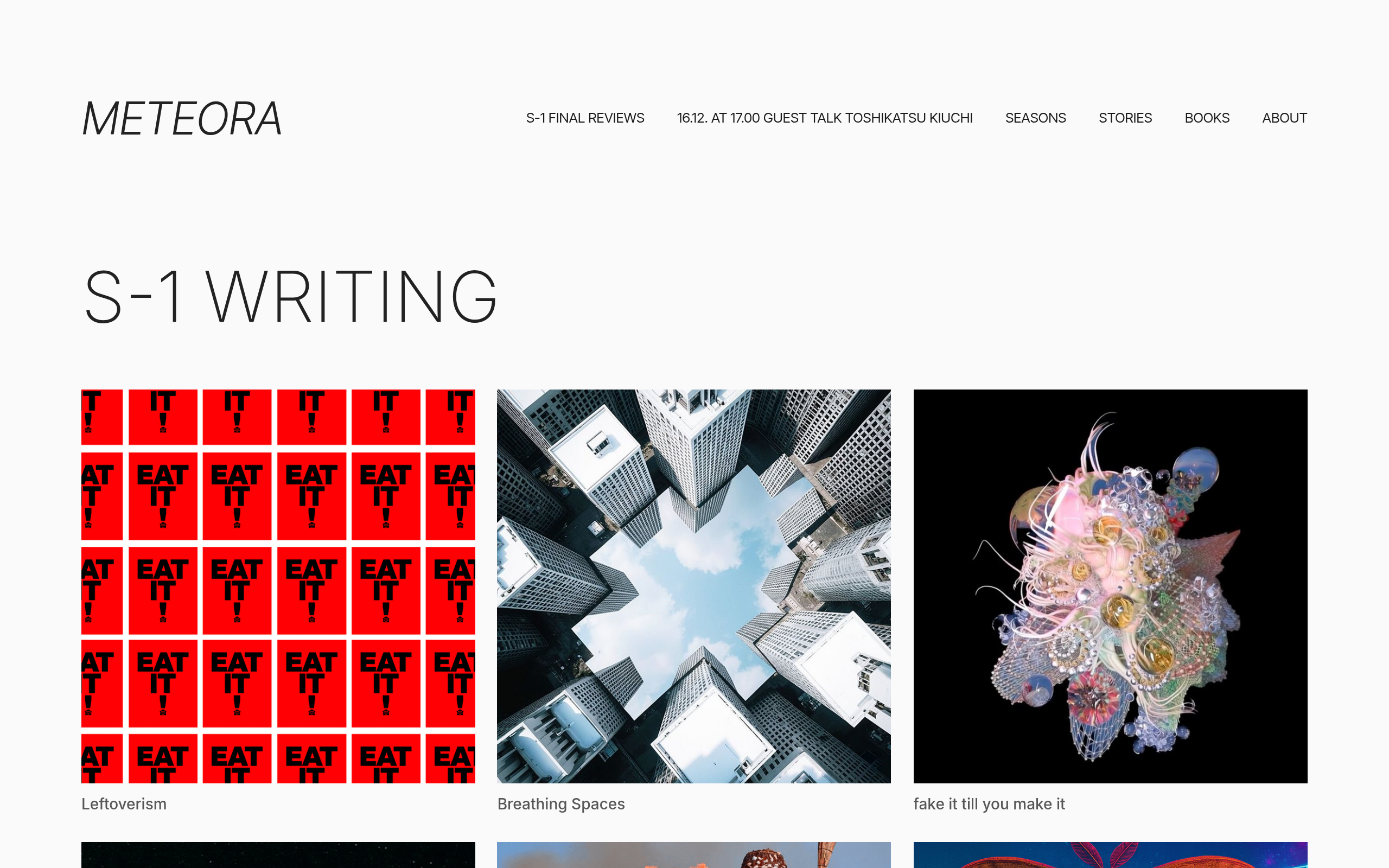
Design Studio
Meteora
Hovestadt's design studio — where the numerical thinking lands.
meteora.ch ↗
Chair
CAAD ETH
The chair Hovestadt held — site for the Applied Virtuality program.
caad.arch.ethz.ch ↗With new eyes, things become active and smart.
Ludger Hovestadt led the chair of Computer Aided Architectural Design (CAAD) at ETH Zürich for over two decades. His ten-volume On Digital Architecture is less a software manual than a treatise on how digital culture changes the very objects of architecture — from singular things to numerical, generic, alive structures.
Hovestadt's design studio — where the numerical thinking lands.
meteora.ch ↗
The chair Hovestadt held — site for the Applied Virtuality program.
caad.arch.ethz.ch ↗Hovestadt's ten books sit inside a centuries-long canon: Vitruvius's ten books on the rational, Alberti's ten books on the real, and now Hovestadt's ten on the complex. Each rewrites architecture for a new mathematical scalarity.
The Applied Virtuality Book Series (Birkhäuser) holds Hovestadt's contribution. On Digital Architecture spans ten volumes, currently grouped into two collected editions on Xenotheka.
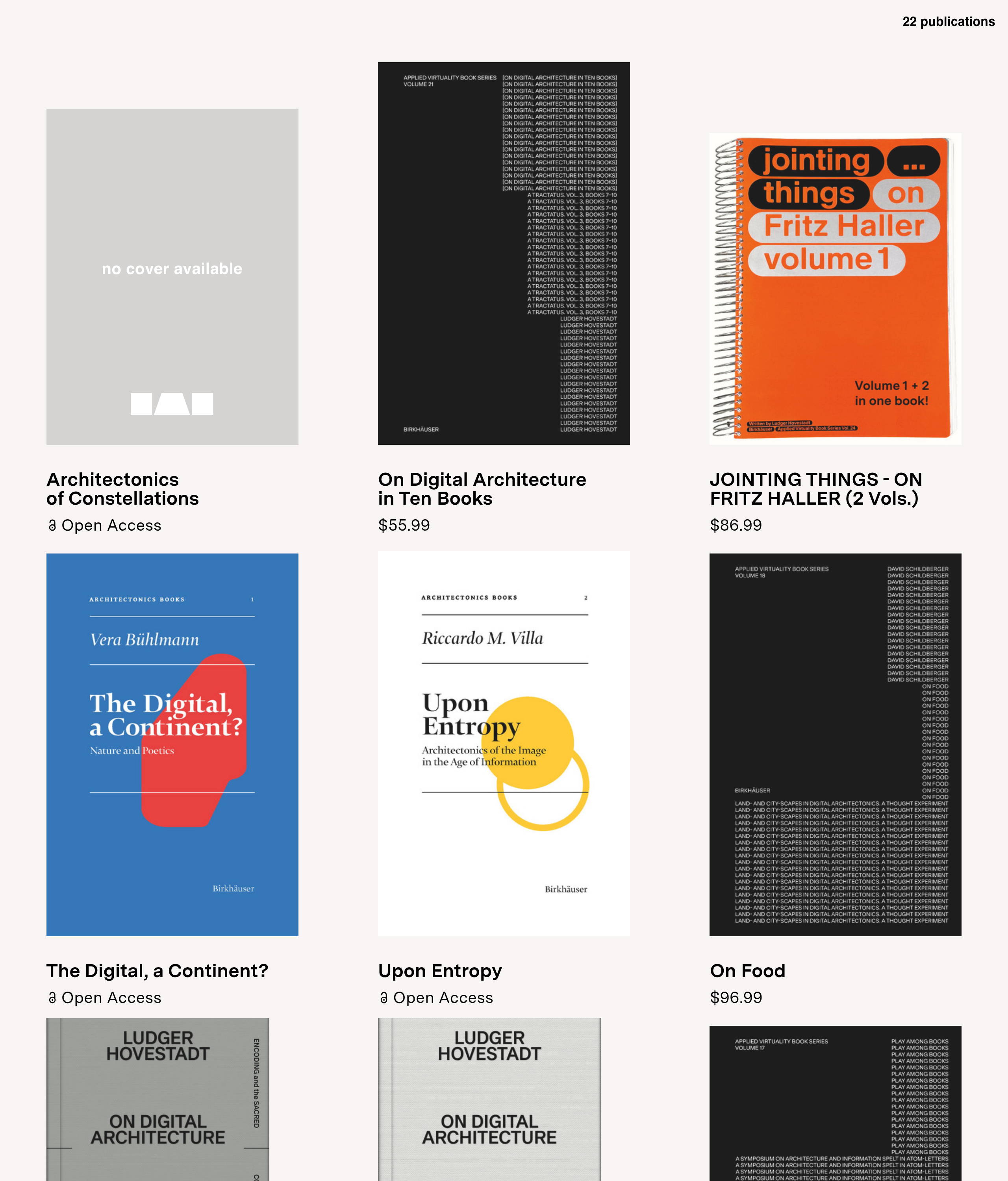
The full publishing context — every volume in the series.
birkhauser.com ↗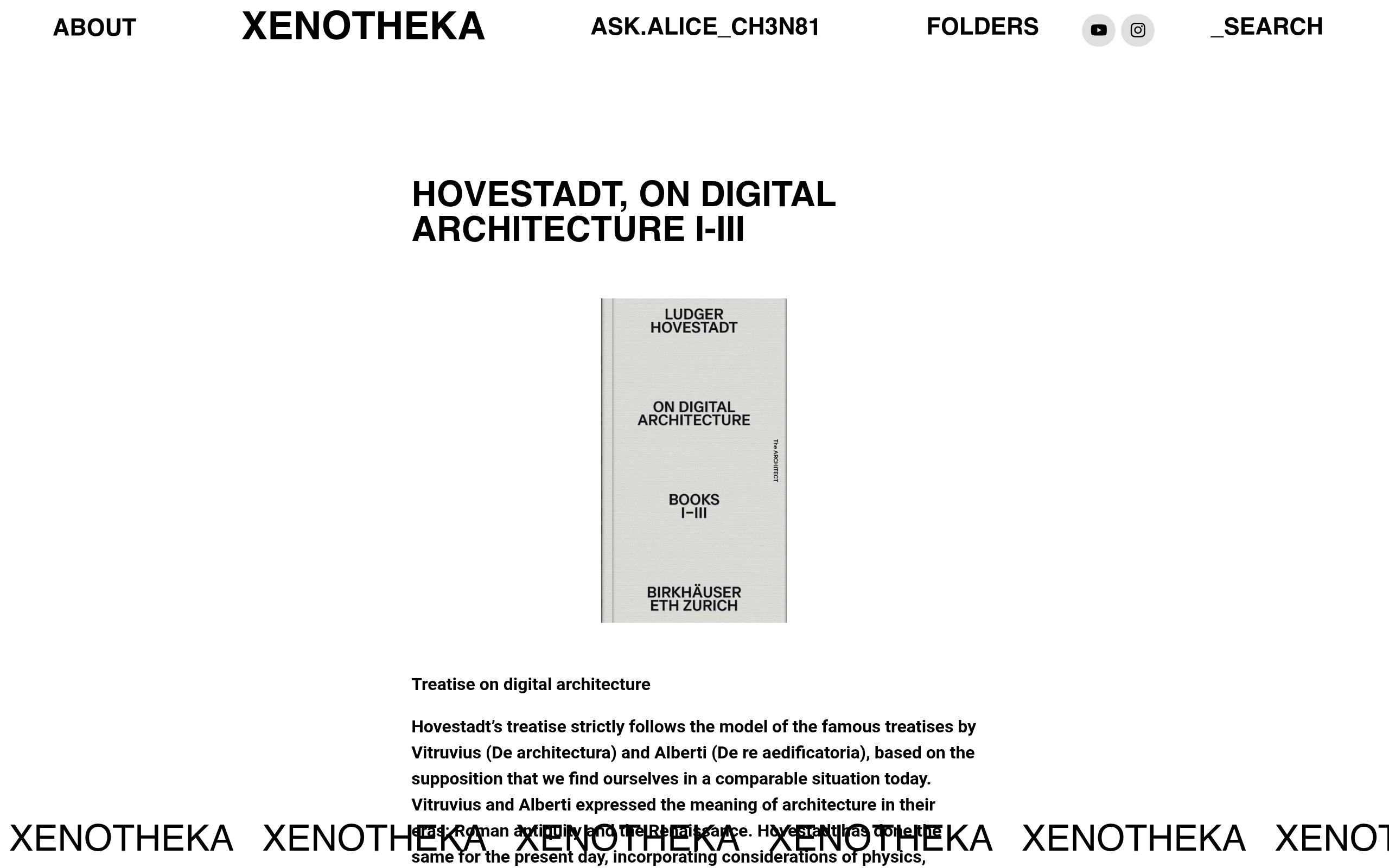
Volumes 1–2 collected on Xenotheka — start here.
xenotheka.com ↗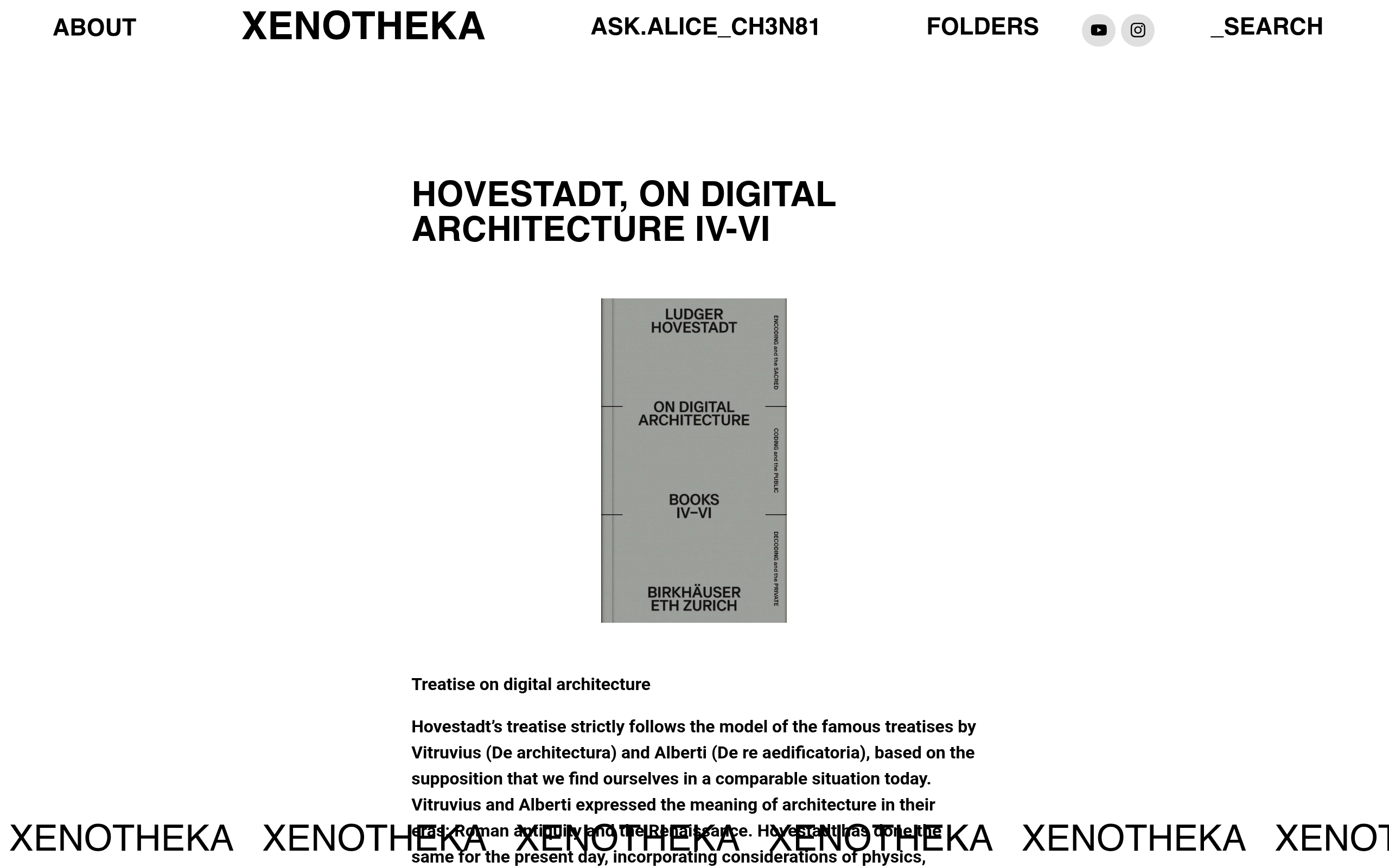
The continuation — collected volumes IV through VI.
xenotheka.com ↗Direct PDFs (Some of Ludger's books):
Full Xenotheka rendering — direct download.
open pdf ↗
Full Xenotheka rendering — direct download.
open pdf ↗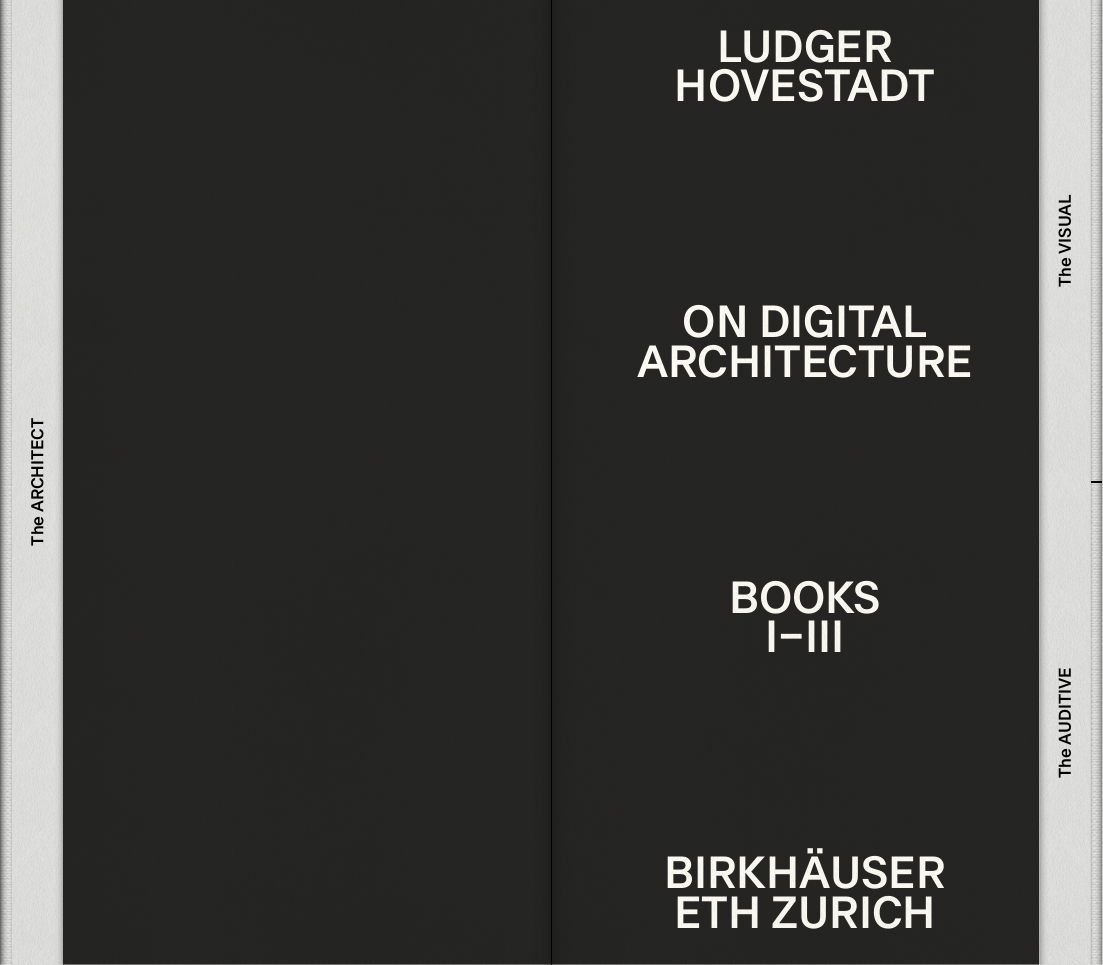
The copy already sitting next to this page.
open pdf ↗The two ancestors: Vitruvius and Alberti — each with their own ten books, each rewriting architecture for their century's scalarity. Plus a video reading.
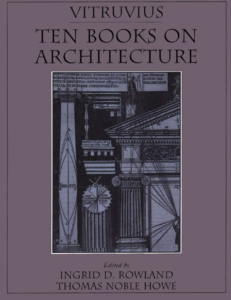
Ten Books on Architecture — the rational scalarity. Hovestadt's first ancestor.
xenotheka.com ↗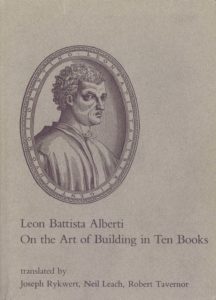
On the Art of Building in Ten Books — the real scalarity. Hovestadt's second ancestor.
xenotheka.com ↗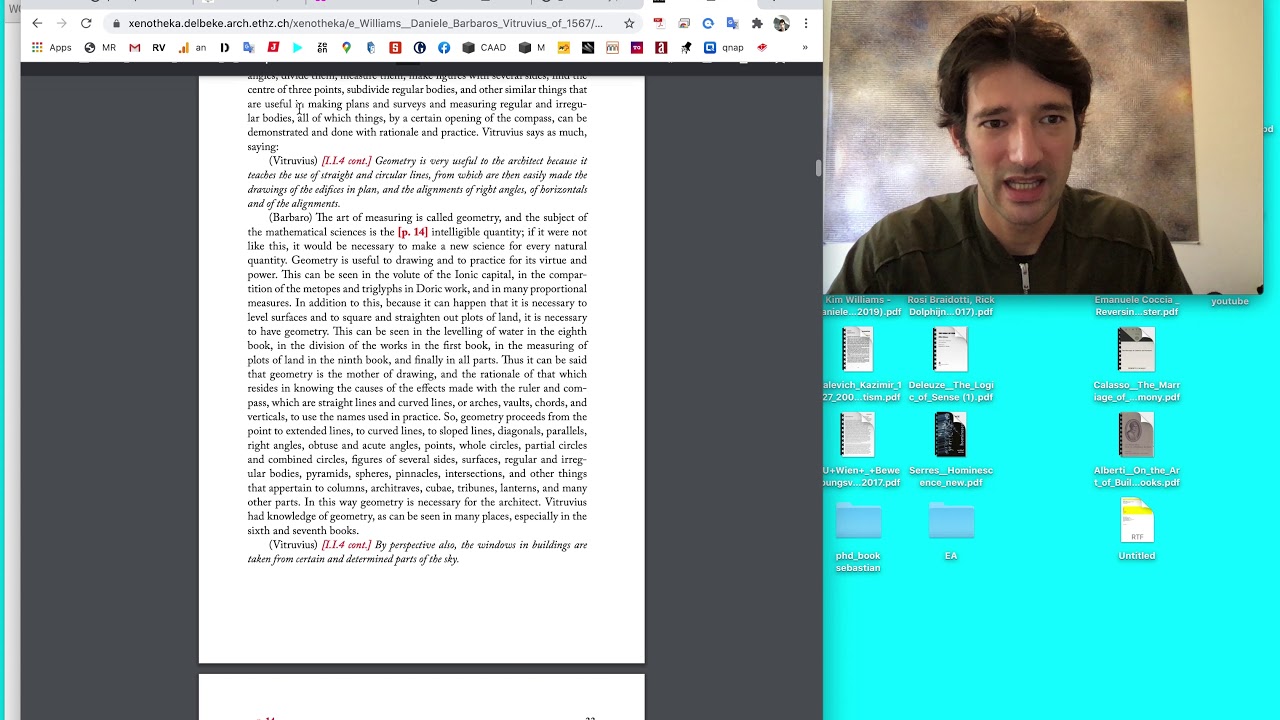
Miro Roman walks through Vitruvius (with Barbaro's commentary) on Xenotheka.
youtube.com ↗These books feel alienated to language. As they feel alienated to the digital world. And they try to find a new stand.
Hovestadt reads architectural thinking through numerical structures — each level adds a different relation, a different way of articulating the world.
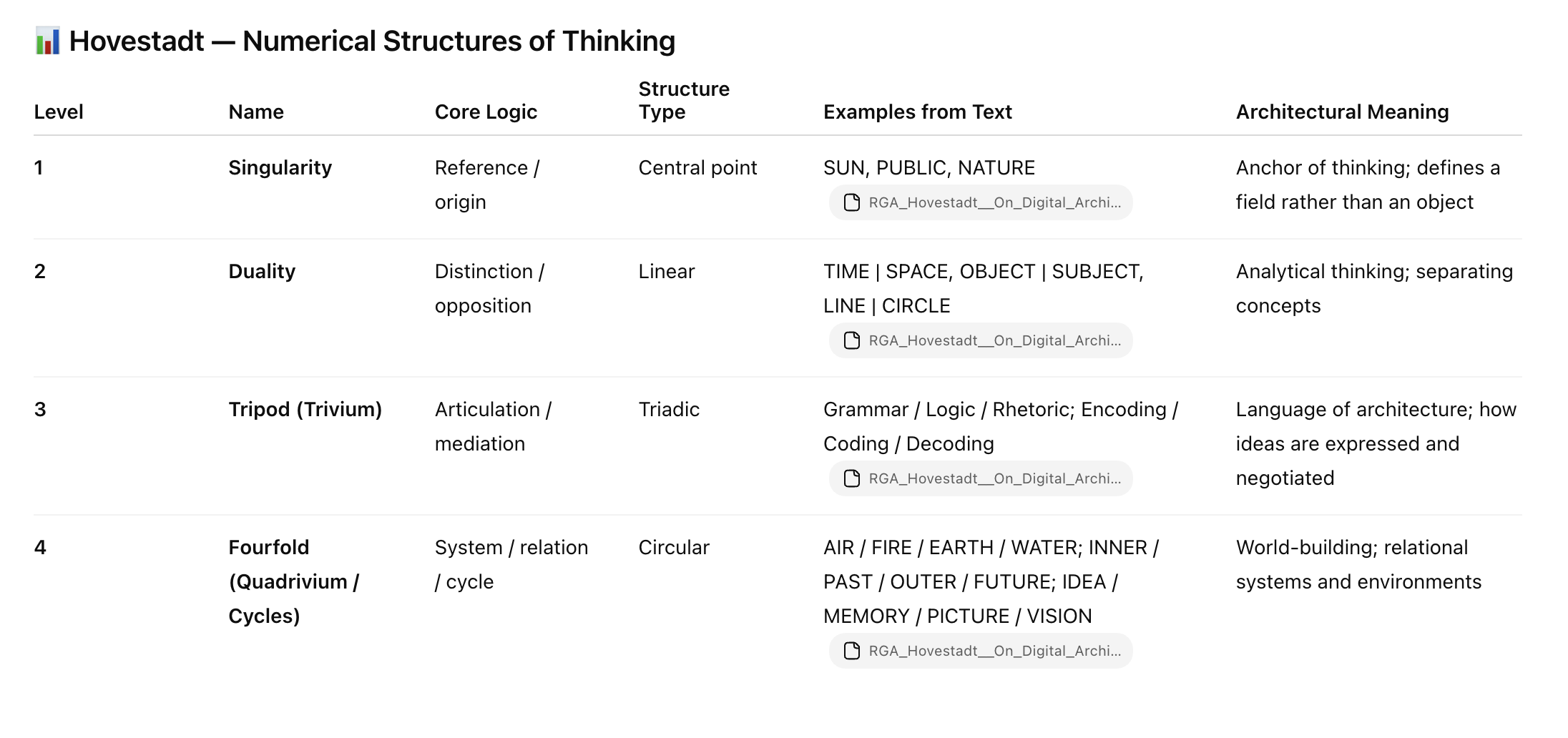
The reference is the Sun, not Nature, not Earth.
You can't improve by doing better.
Hovestadt's emeritus lecture, recorded at ETH Zürich.
video.ethz.ch ↗
Talks, projects, dissertations from the chair.
youtube.com ↗One question worth carrying across the lectures: how do objects breathe?
I am not what I can DO. I am what I can THINK about.
I am not talking about technology, this distant thing which is definite. I am talking about techniques, which can become me. I incorporate techniques. I embody techniques.